The Stone
After castrating his father, Kronos rules the cosmos
The first three rulers of the Greek cosmos are Ouranos, Kronos, and Zeus: grandfather, son, and grandson. We left off with Kronos seizing power of the cosmos by castrating Ouranos. Now we'll explore the rise of Zeus.
Why did Zeus win whereas Kronos and Uranos failed? It's a fascinating question because it's applicable to our own lives. When we apply force and achieve very little, how can we reconcile with these great men and women who achieved great things quickly? What do they do differently? The Greeks have a very good answer to this question and we can understand their answer by studying the rise of Zeus.
Hesiod
Rhea, bound in love to Kronos, bore him a splendid brood: Hestia, Demeter, gold-sandaled Hera, strong and pitiless Hades, lord of the underworld, the booming Earth-shaker Poseidon, and finally wise Zeus, father of gods and men, whose thunder shakes the wide earth.
But Kronos swallowed them all as soon as each child issued from Rhea’s womb and was laid on her knees. He wished that no child of Heaven should rise to take the throne among the deathless gods.
"Kronos remembered his father’s curse: that he was fated to be overthrown. And he was no fool. He kept careful watch and devoured each child."
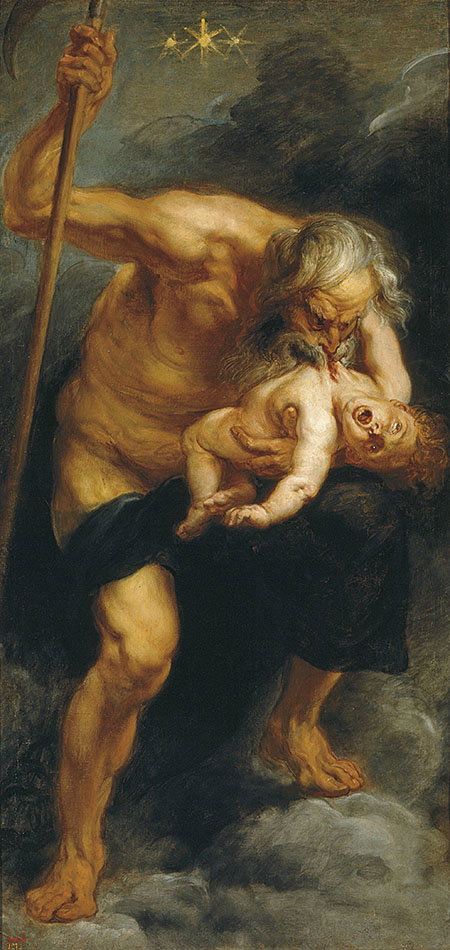
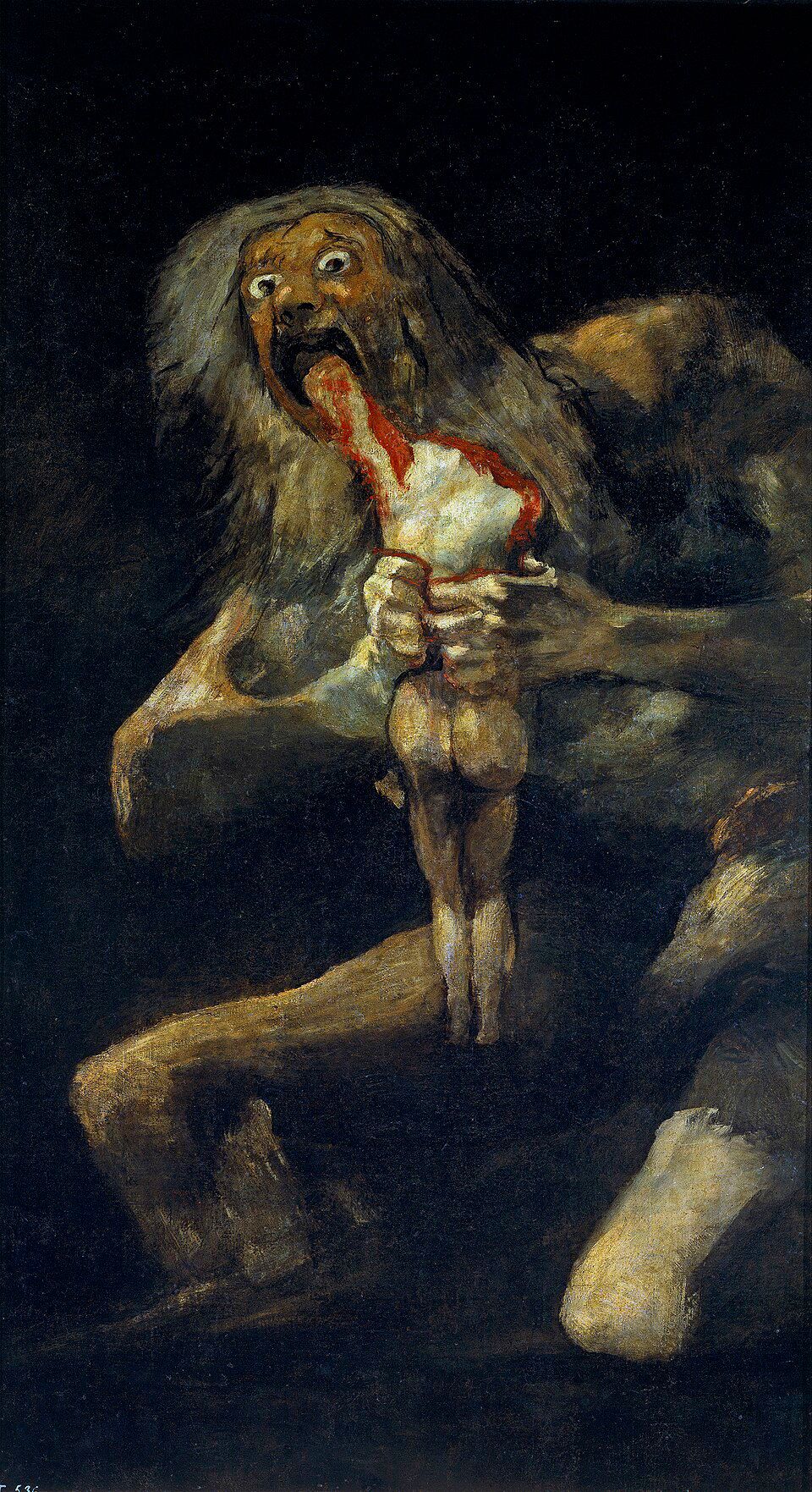
Now here's a question: is Kronos callous? Does he not care, or is he just so afraid of being overthrown that he does what he does not want to do? So those are two very different ways to interpret Kronos, and here are two fantastic paintings capturing each version.
The first version is from Peter Paul Rubens in 1638. It's called Saturn Devouring His Son. So Saturn is the Roman equivalent of Kronos. And here he's depicted as a callous old man who's eating directly from the chest of a child.
The other version of Kronos, probably the more terrifying one, is from 1820. Now this is Francisco de Goya. This is 200 years after Rubens. Goya is a Spanish painter. He's gone deaf at this point. He's moved into a house where he's chosen in old age to paint all these terrible murals all along the walls. They're called his black painting series. And in one of those, he's, there's Saturn and Kronos, biting off the head of what looks to be a man-child, and now he's chewing on the limb, and Saturn is looking at you, and he looks like he's lost himself. He looks remorseful. He looks like he doesn't want to eat the child, but he must.
In the canonical version, in Hesiod, Kronos (Saturn) doesn't chew on his kids; he swallows them whole. Whereas Ouranos refused his children's existence, Kronos allows for existence but only if contained within him. Obviously, this is still distressing to Rhea.
Hesiod
Grief overwhelmed Rhea and she schemed. Before giving birth to Zeus, father of gods and men, she turned to her own dear parents—Earth and starry Heaven—pleading for their help.
Rhea (ops)
How might my child be born in secret? How might Kronos at last be repaid for his crimes against both his father and his children?
Hesiod
They listened, moved by her words, and revealed all that was destined for Kronos and his stout-hearted son.
They sent Rhea to Lyctus, in the rich land of Crete, where she would bear mighty Zeus, the youngest of her children…
[In place of the baby,] the mighty Kronos was given a great stone wrapped in swaddling clothes. Kronos took it in his hands and thrust it into his belly—wretch! He knew not that, in place of the stone, his son was elsewhere, unconquered and untroubled.
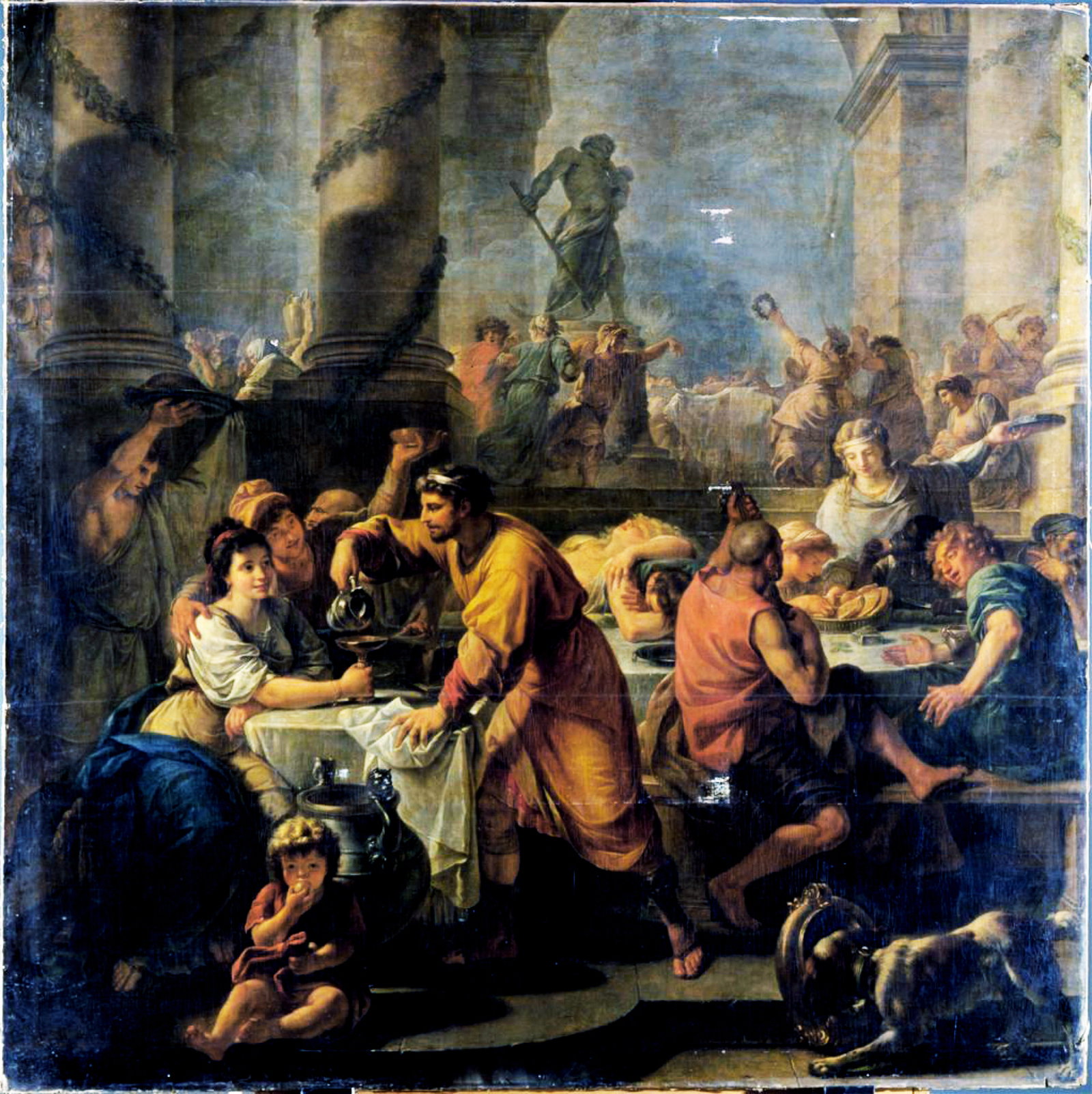
Before we move on from Chronos and leave you with this idea that everyone thinks of him as a baby-eating tyrant, we should clarify that the Greeks actually had a positive view of him. They thought of him as the ruler of a golden age of abundance and prosperity and equality that came before their time, right? So this gets codified in a Roman winter celebration, the Saturnalia, and you may have heard of it. It is famous for its role reversals. So this idea of equality is codified by masters serving slaves during the celebration and then slaves turning around and making fun of their masters.
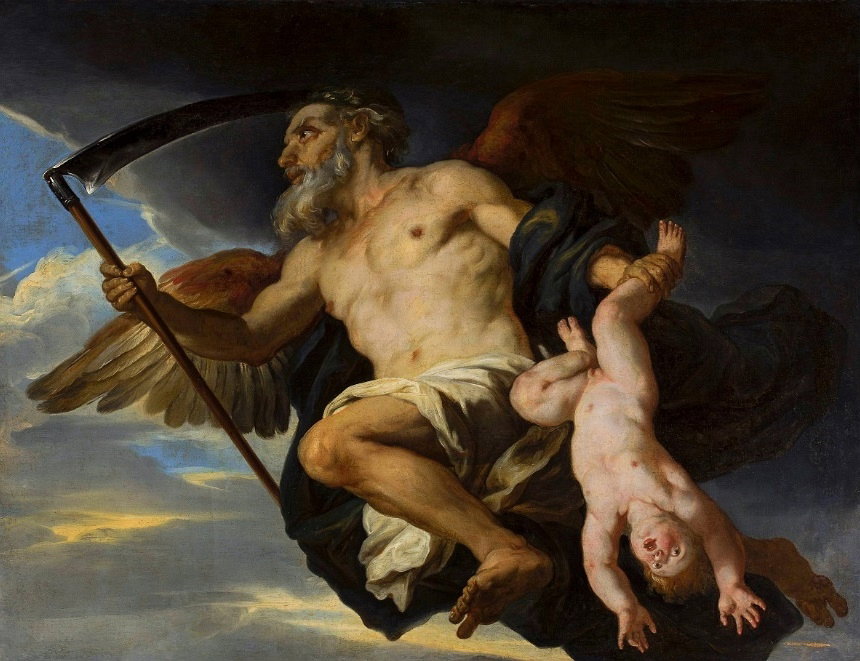
Chronos is also the Titan of time. Now, if you say that at a party, somebody's going to say, "No, it was an orthographic mistake. Chronos does not mean Kronos." And they would be right. However, the Greeks made this mistake themselves. The Romans made this mistake, right? So after 2,500 years, it has become part of the mainstream tradition. By the time you look at Renaissance art and you see paintings of Saturn holding his scythe, you'll know that this scythe was used to castrate his dad Ouranos, hi- the scythe is part of his Roman function as the god of the harvest, and it's also a medieval symbol. It's loosely associated with the, the myth of the Grim Reaper, which is the personification of time essentially knocking at your door when your time is up.
Next, we'll visit the remote caves of Crete, where Gaia has hidden Rhea and her unborn baby, deep in the thick-wooded slopes of dark Mount Aegeum…